
The Making of “The Pension Grillparzer”
The World According to GarpThis thread follows Garp’s first sustained encounter with Vienna and the people and images that gradually give shape to his most accomplished short story.
increasing Bearing strength in each event
 decreasing
Bearing strength in each eventdecreasingArriving in Vienna

A City to Observe
Mother and son abroad
T. S. Garp arrives in Vienna with Jenny Fields after leaving Steering School. Three years of German make him the more confident traveler, and he takes pleasure in directing his mother through the unfamiliar city and managing their practical affairs.
Their initial months are spent moving among pensions, a lodging arrangement that exposes Garp to the varied, imperfect places where visitors sleep. He and Jenny eventually settle near the Ringstrasse, while Garp explores museums, markets, and streets largely on his own.
A writer without a subject
Garp wants to write but has no organizing vision. His early attempt at a story about a close family doing an unusual inspection job yields situations and a tentative title, not a reason for the story to exist.
Vienna’s quieter, older character suits his temperament: he can walk, notice, and think without being swept into a busy social life. Yet observation alone does not tell him what his fiction means, and the city’s apparent stillness becomes the beginning of a long apprenticeship in attention.
The Unfinished Family Story
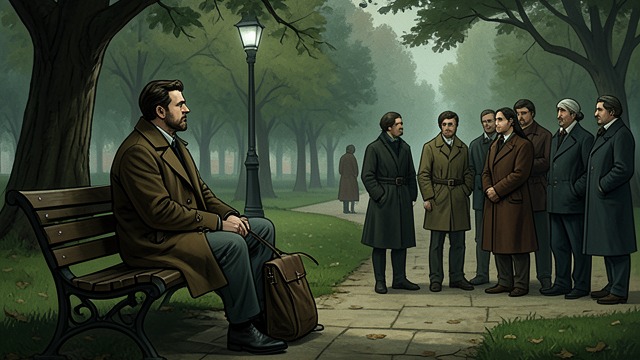
A Story Without a Shape
Classification without consequence
Garp’s proposed story centers on a family that travels with a father employed to assess Austrian hotels, restaurants, and pensions. The family inspects rooms, records faults, and assigns grades, but Garp cannot see why those activities matter beyond their comic surface.
He adds a circus encountered at a railway station, including a bear that rides a motorcycle, but the spectacle does not yet connect to the inspectors’ work. The characters accumulate, while the governing idea remains absent.
Waiting for a larger pattern
Garp recognizes that he can invent one incident after another without producing a satisfying whole. He is not short of images; he is short of a scheme that will make them belong together.
His attempts to continue the story stall as the weather turns colder. The distinction between being able to tell a story and knowing what it means becomes an early lesson in his craft: invention needs an organizing vision, not merely a succession of eccentric events.
The Pension and the Dream
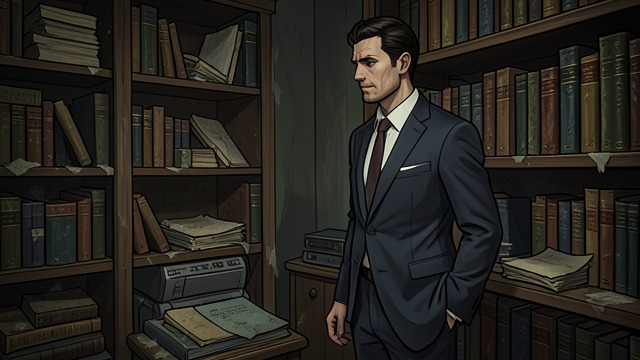
Encountering the Story’s World
A real place becomes a setting
At the Vienna City Historical Museum, Garp finds the preserved writing room of Franz Grillparzer and later reads Grillparzer’s prose. He dislikes the story, judging its sentimentality and execution harshly, but the encounter gives him a name and a point of artistic resistance.
He buys a translation of Marcus Aurelius and begins to think about the difference between choosing a grave subject and shaping it well. The museum’s small room and the old city’s accumulated history sharpen his attention to the distance between a subject and the art that makes it compelling.
The dream that binds the plot
A stay at the real Pension Grillparzer supplies a more consequential encounter: an old woman’s dream of armored soldiers and horses resting at a castle. The dream’s foreknowledge of her husband’s death troubles the family and suggests that the pension’s strange guests may share a world larger than a lodging-house comedy.
Garp now has a setting, a family, and an image of death, but he still cannot finish. He puts the story aside rather than force an ending, learning that withholding a premature conclusion can be part of composition.
The Circus Takes Shape
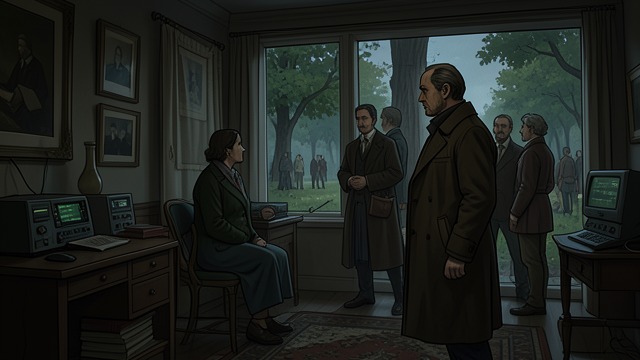
A World of Stranded Performers
The guests behind the oddities
As Garp revises the story, the dream becomes linked to a Hungarian circus troupe lodging at the pension. The troupe includes a dream teller, a singer, a man who walks on his hands, and an aging bear named Duna who practices balancing on a unicycle.
Their history explains their precarious position: political upheaval and the Russians have disrupted their work, while their unusual act has little appeal in Vienna. The hotel’s classification system becomes more than a comic device; it offers a measure of the troupe’s declining prospects and limited choices.
An ending shaped by loss
The bear’s performance embodies the troupe’s stubborn effort to keep working, even as age and circumstance make its prospects narrower. The family’s inspection of the pension, the old woman’s dream, and the performers’ uncertain future begin to converge around mortality and the difficulty of finding a place in the world.
Garp’s growing interest in Vienna’s wartime history helps him understand how a city’s past can shape the present without turning the story into a history lesson. The material finally acquires an emotional and structural direction, though he continues to revise toward an ending that joins its comic incidents to its grief.
Finishing and Publishing the Story
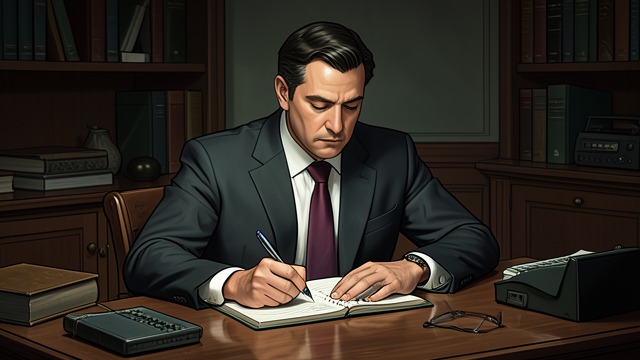
A First Achievement
Completing the fiction
Garp finishes “The Pension Grillparzer” after the story’s separate elements have found a common shape. Its aging performers, the family’s inspections, and the dream of the doomed soldiers are no longer unrelated curiosities; together they create a comedy shadowed by inevitable loss.
He sends the story to a magazine favored by Mr. Tinch, but it is rejected as only mildly interesting and insufficiently innovative. The dismissal wounds Garp, though its impact is tempered by the fact that Helen Holm values the story and understands what he attempted.
A benchmark for the future
The story earns little money and initially reaches few readers, but it establishes Garp’s confidence in his ability to imagine beyond direct experience. Later readers and critics will recognize it as a measure of what his fiction can accomplish when comedy, invention, and compassion remain in balance.
When the story is republished as an illustrated book with Duncan Garp’s drawings, it becomes a family collaboration and a return to Garp’s earliest strong work. That later edition renews his creative energy and helps him begin writing again after long periods of silence.
1961, when T. S. Garp is eighteen
Late summer and autumn 1961
Winter 1961–62, during Garp’s first Vienna winter
Spring and summer 1962
August and September 1962
